
I was recently notified of a paper: Fotoglou, A. et al (2023) ‘Sociability: The key to sensory processing disorder’, Brazilian Journal of Science and Technology, Vol. 2 (No.1), p. 82-97. The paper sets out evidence to support a direct link between sociability and sensory processing disorder. Read on for more information …
Category Archives: Blogs
Intensive Interaction, emotional development and emotional well-being: by Melanie Nind

For my blog this week I am summarising a chapter from the book ‘Intensive Interaction: Theoretical Perspectives’ (Ed: Hewett, D. 2011) by Professor Melanie Nind: ‘Intensive Interaction, emotional development and emotional well-being’
‘Being with’ and ‘making psychological contact’ through Intensive Interaction

In this Blog I write about the parallels of Intensive Interaction and Person Centred Therapy. Read on for more …
Transactional Roles and Responsibilities … and Intensive Interaction
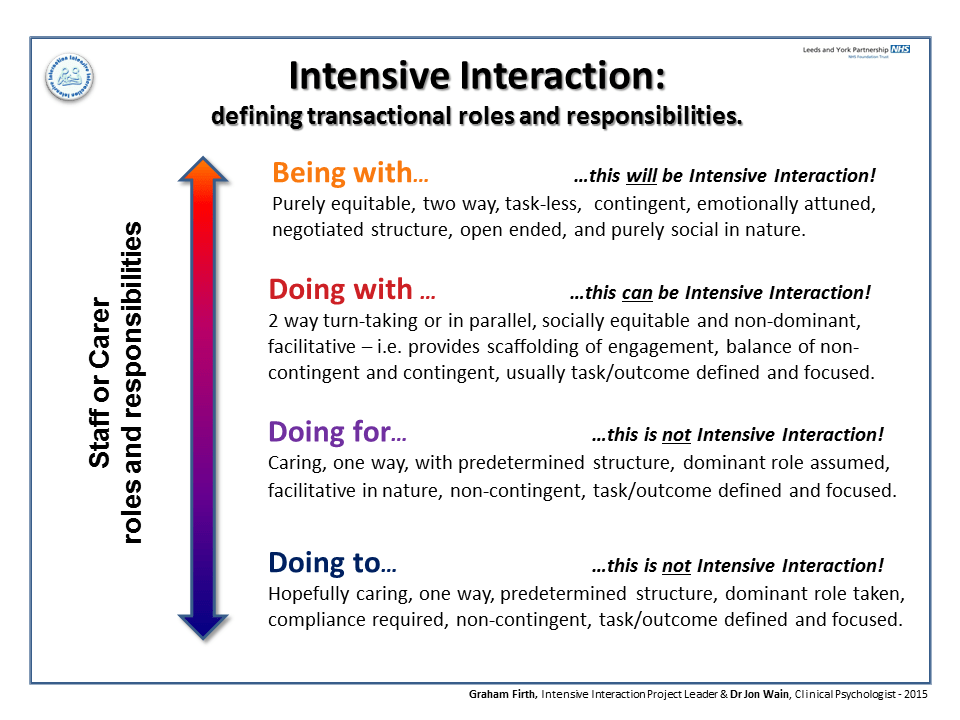
In this, my latest Blog, I share a useful adaptation of a training slide on defining ‘transactional roles and responsibilities’. Read on for more information …
Thinking about the ‘Topic’ of Intensive Interactions.

Thinking about the ‘Topic’ of Intensive Interactions … an interesting issue taken from the paper ‘Understanding the importance of the Partner in Communication Development for Individuals with Sensory and Multiple Disabilities’. Read on for more …
New paper on using ‘Adaptive Interaction’ with people with dementia

My Blog this week is about a new paper on ‘Using Adaptive Interaction to Simplify Caregiver’s Communication with People with Dementia Who Cannot Speak’ (in Frontiers in Communication, Jan 2022). Read on for more …
Robbie Gordon: an obituary
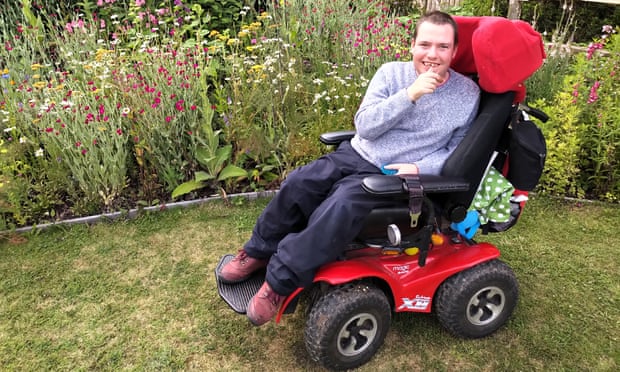
I was recently pointed to The Guardian’s ‘Other Lives’ obituary section by my friend Dave Hewett. He sent me a link to the obituary of Robbie Gordon … please read on.
The ‘double empathy problem’

My Blog this week focuses on the ‘The Double Empathy Problem’ – a description of the ‘breakdown in reciprocity and mutual understanding that can happen between people with very differing ways of experiencing the world.’ The Blog is based on the work of Dr Damian Milton.
‘Intensive Interaction: an evaluation of two different recording formats’

‘Intensive Interaction: an evaluation of two different recording formats’ – a study looking at the introduction of two different Intensive Interaction paper recording systems in a UK special school. Read on for more…
The ‘Efficacy of Intensive Interaction’ … 25 years on from Melanie Nind’s ground-breaking Intensive Interaction research paper.

For my Blog this week I look back at Melanie Nind’s ground-breaking paper on the ‘Efficacy of Intensive Interaction’, published 25 years ago.

