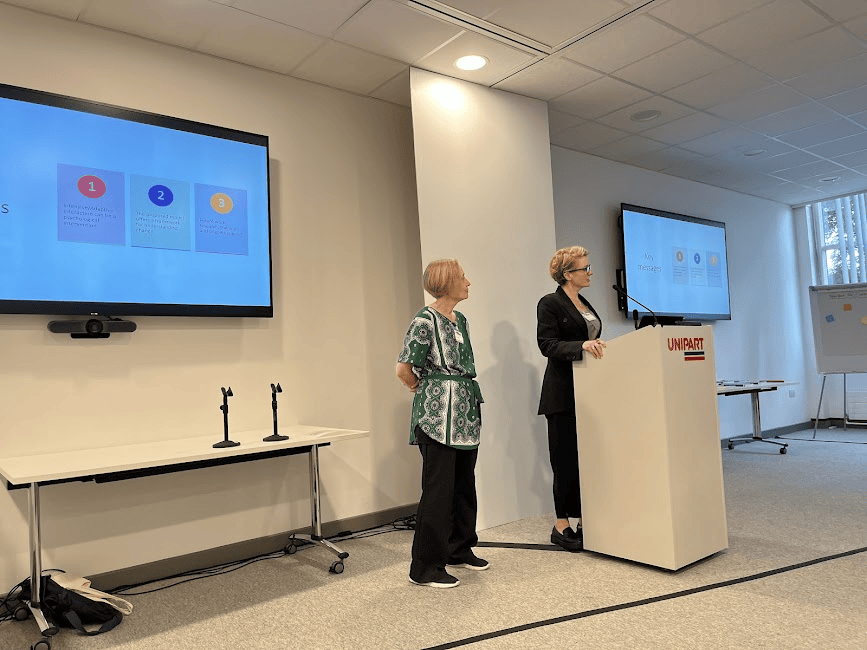
The Intensive Interaction Conference 2026: Feedback Report … read on for more.
Category Archives: Blogs on Psychology and Intensive Interaction
‘Intensive Interaction in Context’ – 25 years later.
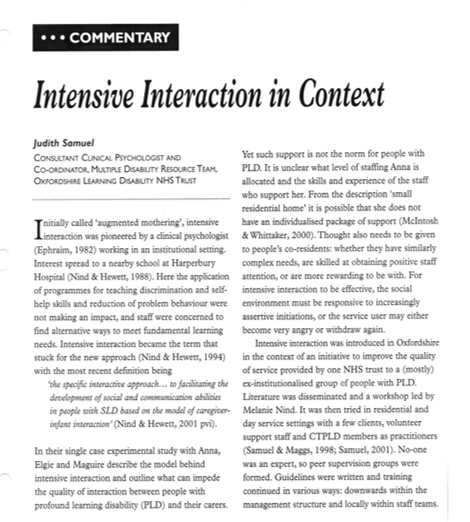
Intensive Interaction in Context – It’s been 25 years since Dr Judith Samuel published a paper on introducing Intensive Interaction into residential care for adults with profound intellectual disabilities in Oxfordshire. Read on for more …
Something to consider …
Something to consider … Read on for more.
Intensive Interaction & Adaptive Interaction … what’s the difference?

You might be asking if Intensive Interaction and Adaptive Interaction are really one and the same thing … read on for more
The Story of Intensive Interaction

This Blog simply points readers to a new page on the ‘Connecting with Intensive Interaction’ website called ‘The Story of Intensive Interaction’.
The Intensive Interaction Conference 2026

Now booking for the Intensive Interaction Conference 2026:
‘Integrating Intensive Interaction Principles into Psychological Practice’, Friday 4th September at the Unipart Conference Centre, Oxford.
Read on for more details of the conference line-up and on how to book your place.
‘Integrating Intensive Interaction Principles into Psychological Practice’

Announcing the new book published today: ‘Integrating Intensive Interaction Principles into Psychological Practice’ Edited by Dr Sophie Doswell & Dr Maggie Ellis (2025), Routledge.
Read on for more details …
Intensive Interaction as a psychological therapy
With the upcoming publication of ‘Integrating Intensive Interaction into Psychological Practice’ in this Blog I have abridged a 2009 article on the issue from ‘The Psychologist’; I thought it would whet our appetites for the upcoming book’s launch (next week!). Read on for more …
Books on Intensive Interaction in 2025

With the imminent arrival of a new book on Intensive Interaction (‘Integrating Intensive Interaction Principles into Psychological Practice’, by Dr Sophie Doswell & Dr Maggie Ellis) for this Blog, I am setting out in chronological order the current range of books published so far (in English) on the approach.
Read on for more …
Evidence of mutual non-verbal synchrony in learners with severe learning disability and autism, and their support workers: a motion energy analysis study (because of the use of Intensive Interaction!).

I have recently been pointed to a research study involving the use of Intensive Interaction. This fascinating study looked for ‘Evidence of mutual non-verbal synchrony in learners with a severe learning disability and autism, and their support workers: a motion energy analysis study’: Read on for more …

