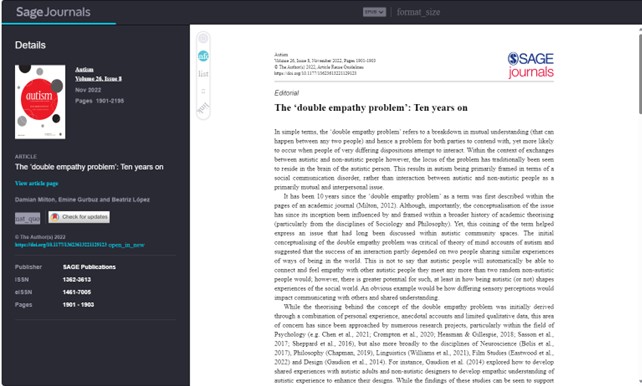
I was recently pointed to a decade-on update on Damien Milton’s seminal paper: ‘On the ontological status of autism: The ‘double empathy problem’’. Read on for more …
Tag Archives: Intensive Interaction
The ‘Intensive Interaction Published Research Summaries Document’ 2024

For my Blog this week I am simply pointing readers to an updated version of the Intensive Interaction Published Research Summaries Document for 2024. Read on for more …
Intensive Interaction as an intervention approach in children with autism spectrum disorder: a systematic review
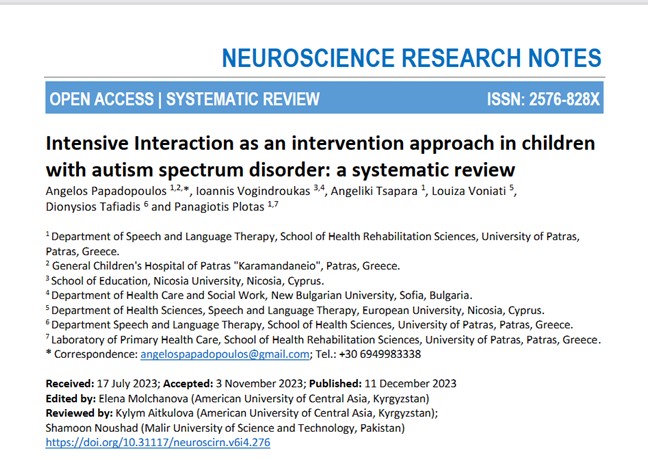
For my first Blog of 2024 I am directing readers to a new systemic review on using Intensive Interaction with children with autism.
‘A life well led’?

For my Blog this week I am referencing a short paper called ‘“A life well led”: What does this mean for a person with severe intellectual disability?’.
Remembering Stansfield View

This Blog points the reader to a film called ‘Remembering Stansfield View’, made as ‘a love letter to all the people I have been fortunate to have known with learning disabilities’ by Gerard Wainwright. Follow the link for more …
“Things gain meaning by being used in a shared experience or joint action”

“Things gain meaning by being used in a shared experience or joint action” – Follow the link for more on this …
The exercise of power? The current chaotic context in which we work and care

Continuing the theme of the final paragraph of my last Blog (on the nature of ‘knowledge’ with respect to Intensive Interaction), this being about those who have power over our public service provision understanding the outcomes of Intensive Interaction, I mentioned the role of government ministers (here in the UK). So, since then I haveContinue reading “The exercise of power? The current chaotic context in which we work and care”
Some discussion on the nature of ‘knowledge’ with respect to Intensive Interaction
My Blog this week offers some discussion on the nature of ‘knowledge’ and knowledge creation with respect to Intensive Interaction. Please read on for more …
‘Flow’ and ‘Monotropism’ – two neurodivergent sides of the same attention state coin?

‘Flow’ and ‘Monotropism’: can a better understanding of their overlap be helpful in understanding the social ‘attunement’ attained during Intensive Interaction engagements.
Intensive Interaction as an ‘autism intervention’?
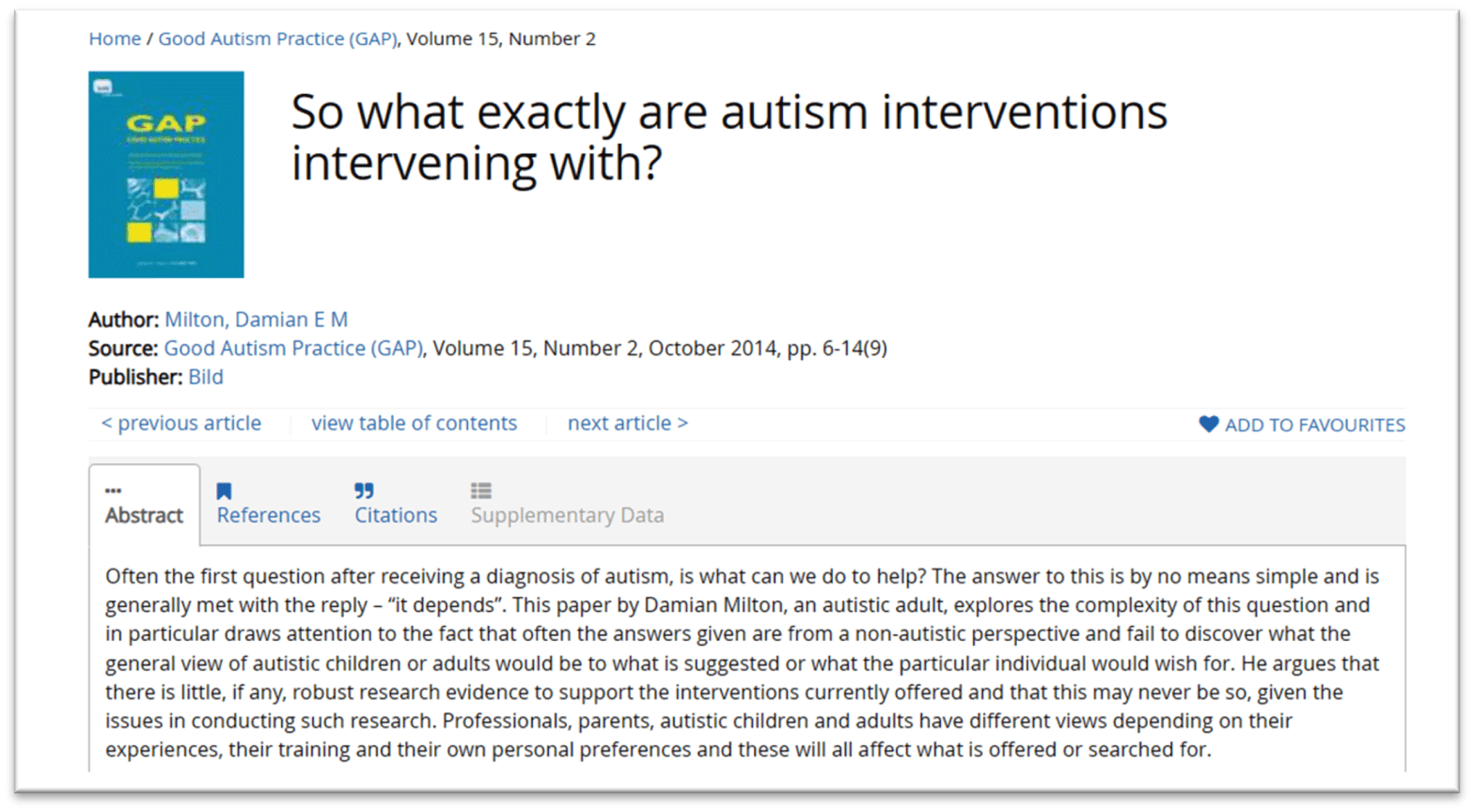
For my Blog this week I am looking at a paper by Dr Damian Milton: ‘So what exactly are autism interventions intervening with?’ (Good Autism Practice, 2014). For more read on…
 Connecting with Intensive Interaction