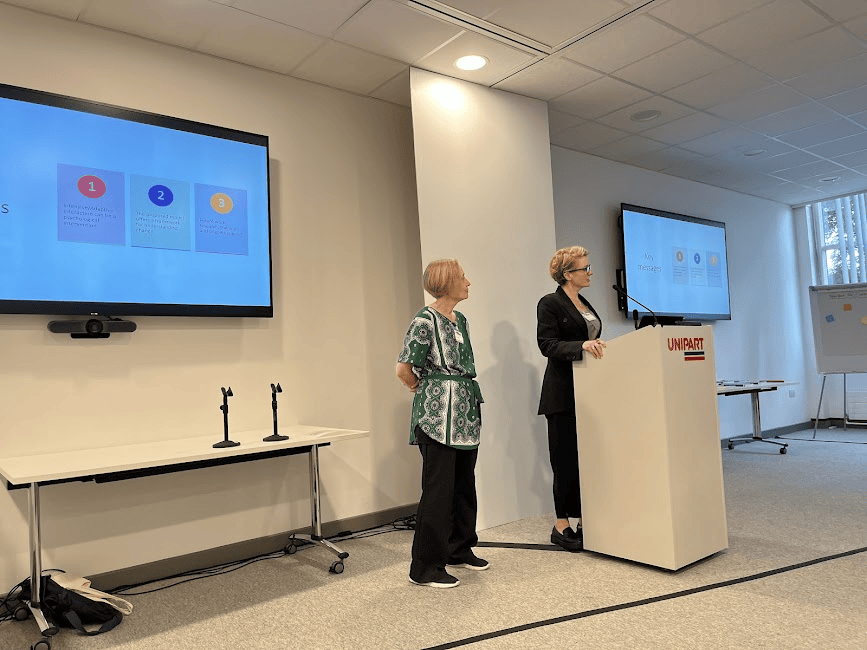
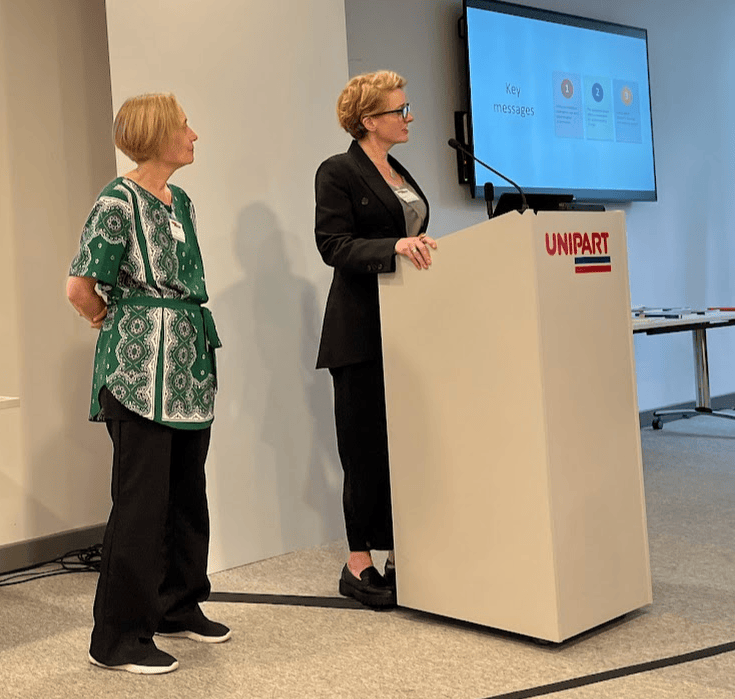
Overall, the feedback from the 2026 Intensive Interaction Conference (‘Integrating Intensive Interaction Principles into Psychological Practice’ on Friday, 4th September at the Unipart Conference Centre, Oxford) was overwhelmingly positive, with respondents valuing the conference for its coherent theme, variety of perspectives, and practical relevance.
The attendees also reported that the presentations collectively broadened and deepened their understanding of Intensive Interaction and Adaptive Interaction and demonstrated its application across different disciplines and client groups.
| Overall Conference Evaluation | Average Rating (scores 1-5*) from 26 respondents |
| The conference met my expectations | 5.00 |
| The conference content was relevant to my interests | 4.96 |
| I gained useful knowledge or skills | 4.96 |
| The conference was well organized | 4.96 |
| I would recommend this conference to others | 5.00 |
Key Feedback themes included:
- Strong overall response: The attendees reported finding the presentations informative, thought-provoking, relevant and insightful; indeed, many struggled to identify a single favourite because the sessions complemented one another so well. Presentations using video footage and case studies were especially impactful: seeing Intensive Interaction in practice with real people particularly helped visual learners understand its effects, whilst demonstrating the impact on individuals, families and staff.
- A coherent and evolving understanding of Intensive Interaction: Several people appreciated the exploration of what Intensive Interaction ‘really is’, particularly its psychological, relational and therapeutic dimensions, rather than viewing it simply as a teaching or communication strategy. The idea of Intensive Interaction as a way of connecting with suffering, helping people feel “felt” and “heard”, and potentially healing rather than simply educating resonated strongly.
- Positive psychology: Professor Rachel Ann Jones’ presentation on the parallels between positive psychology and Intensive Interaction was particularly well received. Attendees found concepts such as the ‘broaden-and-build’ theory accessible and relevant, with some already applying the ideas in their own practice.
- Adaptive Interaction and dementia: The growing evidence base for Intensive Interaction/Adaptive Interaction, and its use with people with advanced dementia, was highlighted as especially valuable. Some felt the term “Adaptive Interaction” better reflected the approach than “Intensive Interaction”, as it avoids implying additional work, effort or expectation.
- Practical application: Attendees valued sessions addressing how Intensive Interaction can be embedded within psychological and learning disability services, schools and care settings, and how to engage staff and make the approach meaningful in practice. Even when sessions focused on groups outside an attendee’s own area of work, participants generally found them useful and thought-provoking. The variety of professional perspectives was seen as a major strength.
- Conference experience: The keynote was praised for setting up the day effectively, while the combination of information sharing, practical examples, psychological theory and networking was reported as exceeding expectations.
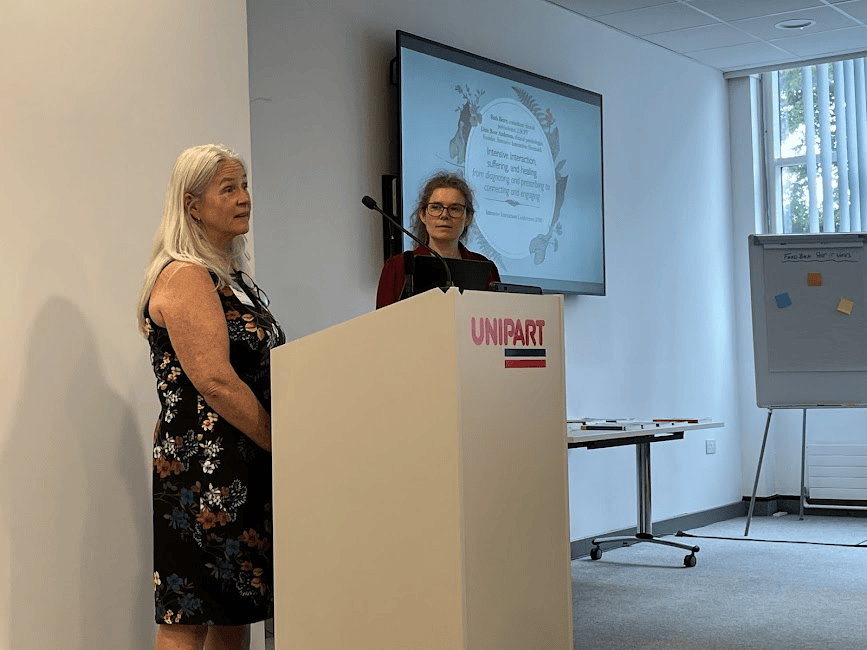
In summary: Overall, feedback on the conference was overwhelmingly positive, with many delegates praising the outstanding presentations, welcoming atmosphere, excellent hospitality, food, venue and well-organised format. Several described feeling included and connected to a community of people committed to improving the lives of those they support.
Also, the feedback suggested that the conference successfully determined Intensive Interaction (and Adaptive Interaction) as a broad, psychologically informed approach to connection and communication. Attendees particularly valued the combination of theory, lived experience, and real-world examples, and many left with new ideas for research and practice.
Delegates generally expressed strong support for retaining the in-person conference format, the short presentations and varied range of speakers. Therefore, overall, future conferences should aim to preserve the excellent atmosphere, quality of content and hospitality while creating more opportunities for participation, networking and practical learning, alongside a few improvements to accessibility and presentation delivery.
There was one feedback comment that I found particularly heartening:
“This conference made me feel like I had found my tribe – different people, different skill sets, but all want the best for the people they support, whether that be young or old. I felt included and exactly where I should be. Thank you so, so much”.
Can’t say fairer than that, eh! 😊
(Psst … I got a bit of help from AI with some of the summary work!)
Appendix: Individual Comments:
Which presentation(s) did you find most valuable and why?
- I found them all valuable – it felt like there was a coherent theme across all the presentations, with all equally contributing to the overall conference experience, i.e. broadening and further developing our collective understanding of the Intensive Interaction approach.
- Particularly enjoyed the keynote speech as it really set up the whole day. Also, positive psychology and intensive interaction made a potentially complex topic so accessible. And finally, Jules’s use of video footage showing intensive interaction in action, with reflection on the impact on the lives of individuals and those around them. The ones covering the increasing body of evidence for the benefits of using II and the move towards using this in the care of people with advanced dementia.
- I actually enjoyed all of them for different reasons. I found them all relevant, interesting, informative and insightful. Even though I don’t work with people living with dementia, some of my colleagues do. I would like to submit a compliment to Jules McKim for his style of presenting. I find his way of delivery captivating. He is very natural and everything just flows perfectly.
- The ones covering the increasing body of evidence for the benefits of using II and the move towards using this in the care of people with advanced dementia. The use of the term Adaptive Interaction especially interested me as alternative to the term ‘Intensive’ which I find implies a level of ‘work / effort / expectation’ that the practice should not reflect.
- I found them all valuable and reassuring. I found the dementia/ adaptive II helpful and the case studies of families involved made me think they could be used as a top tips when loved one in a care home, provided by every provider. Learning disability being my passion, every presentation fed into our way of being with severe learning disabled and traumatised dudes.
- All really interesting thought provoking and informative.
- Dr Samuel and Jules McKim’s talk resonated with me, whilst also providing ideas for further reading and research. Also, Professor Rachel Jones’ talk on positive psychology, I have already started to implement her ideas with my staff.
- I particularly enjoyed Prof Rachel Ann Jones’ presentation and found the theories discussed such as the broaden-and-build theory, relevant and interesting. I also found Jules McKim’s input valuable and engaging. Intensive Interaction for people who present with “behaviours of concern” is particularly relevant to my workplace in a special school for autistic primary aged children.
- I really enjoyed all of the presentations and found the topics engaging and thought provoking. Off the top of my head, the psychological model for II in Maggie’s presentation is something that I think is really powerful and then the session on positive psychology was fascinating too. I loved the concept of II promoting a feeling of being felt and how important this is for all of us. To me this part of II has always been understood but digging deeper into this is really important as II can often be seen solely as a teaching or communication ‘strategy’, however all of us who use it know it is deeper than that and being able to communicate this across a range of disciplines seems relevant, now more than ever.
- I liked the presentation of the model but then I liked the contrasts/overlaps across the different presentations. I thought they were all really interesting and valuable.
- Ditte Rose Anderson and Ruth Berry – felt really relevant to my role as behavioural specialist and how to do this meaningfully in practice. Arlene Astell – helped me to think about addressing difficulties with getting staff on board with this.
- The information regarding Dementia and Behavioural Expressions of Need were particularly enlightening.
- Well, the least relevant were the couple on dementia as I don’t work with that client group, but they were still extremely interesting. The positive psychology was personally useful. I came away from all of them with a new perspective on Intensive Interaction as a tool to heal, not just educate.
- Working in a learning disability service I found the presentations relating to learning disability, embedding II within psychological services and Ditte and Ruth’s presentation very informative on the realities of II.
- Dr Ellis’ presentations were very informative and well presented.
- I really liked the variety. I think that it was useful to hear about how Intensive Interaction is being used within different services. My field is adults with a learning disability, but there was info in presentations not about people with a learning disability that was relevant/food for thought. It was very inspiring to be part of these presentations which all concerned the psychological application of II.
- I really loved the first one presenting a model, learning about Adaptive Interaction and about the similarities of positive psychology interventions and II.
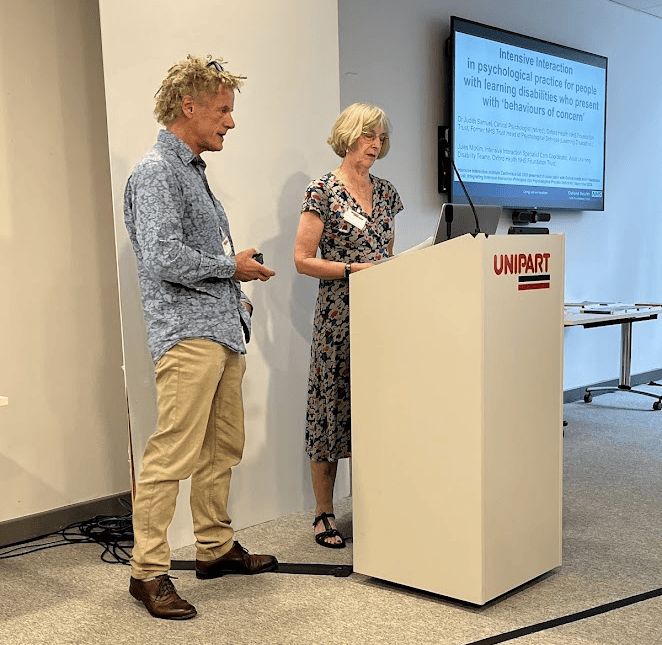
- I enjoyed all the presentations, and it is hard to prioritise one above the other as they all had a tremendous amount of information and benefit and were all thought provoking and interesting. I found the use of the videos in Jules’ and Judith’s presentation were especially effective in conveying our message. I would say the conference exceeded my expectations as it was a perfect blend of information sharing and networking and it was wonderful to see the younger generation of practitioners being so enthused and excited.
- I engaged most with the presentations that had videos as I am a visual learner. I like to see examples of Intensive Interaction in practice – with real people.
- I really enjoyed Ditte and Ruth- the sheer humanity and genuine emotional congruence was powerful.
- All presentations were excellent, particularly enjoyed watching or hearing of case studies in presentations from Ruth Berry & Ditte Rose Anderson, and Jules McKim and Judith Samuel. All presenters had a clear understanding and lived experience of using Intensive Interaction and in supporting others to know and better use Intensive Interaction in their work / with those they supported.
- I especially liked the fact that we’re continuing the conversation on what II really is. What kind of a ‘thing’ or process and I enjoyed the fact that multiple disciplines, professions and theories were discussed.
- That’s a difficult one…they were all superb. I think Sophie and Maggie’s starter was superb – ” if you’re not using II with this group of people, what are you doing?” was one of the best quotes of the day. I also loved Ditte and Ruth’s presentation “We need to find ways to connect with suffering.” Wow. Then the amazing info from Arlene and Rachel talking about the psychology and convergence, with the cherry on the top of how to implement in services from Judith and Jules means that everything was pertinent, everything was just so good. Thank you.

