
Following on from my last two Blogs, in this Blog I set out what the current body of Intensive Interaction research actually tells us. Read on for more …
Category Archives: Research Summaries with Child Participants
‘Intensive Interaction in the mainstream classroom’: 10 years on …

It is now ten years since the publication of the paper ‘Intensive Interaction in the mainstream classroom: evaluating staff attitudes towards an inclusive socio-communicative intervention’: read on for more…
Catherine’s Legacy – 20 years on.

It is 20 years since a paper was published that I think is hugely powerful, and one that I often directly quote from during the training that I give. Read on for more …
Intensive Interaction as an intervention approach in children with autism spectrum disorder: a systematic review
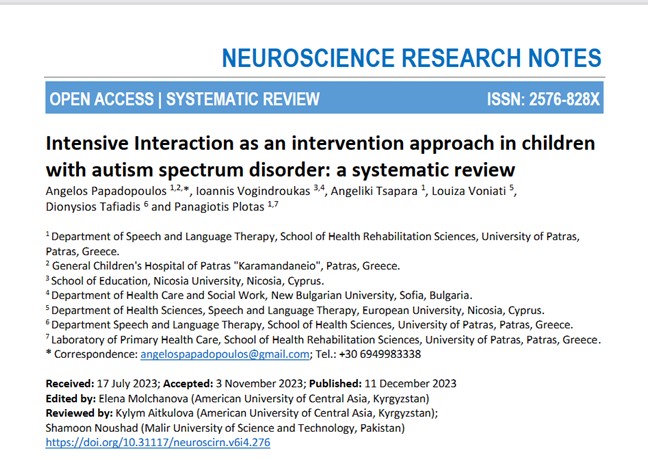
For my first Blog of 2024 I am directing readers to a new systemic review on using Intensive Interaction with children with autism.
Staff experience of the implementation of Intensive Interaction within their places of work with people with learning disabilities and/or autism

Follow the link above to an accessible summary of the paper: Berridge, S. & Hutchinson, N. (2021) ‘Staff experience of the implementation of Intensive Interaction within their places of work with people with learning disabilities and/or autism’, Journal of Applied Research in Intellectual Disabilities – DOI: 10.1111/jar.12783
Improvised music to support Intensive Interaction for children with complex needs: A feasibility study of brief adjunctive music therapy
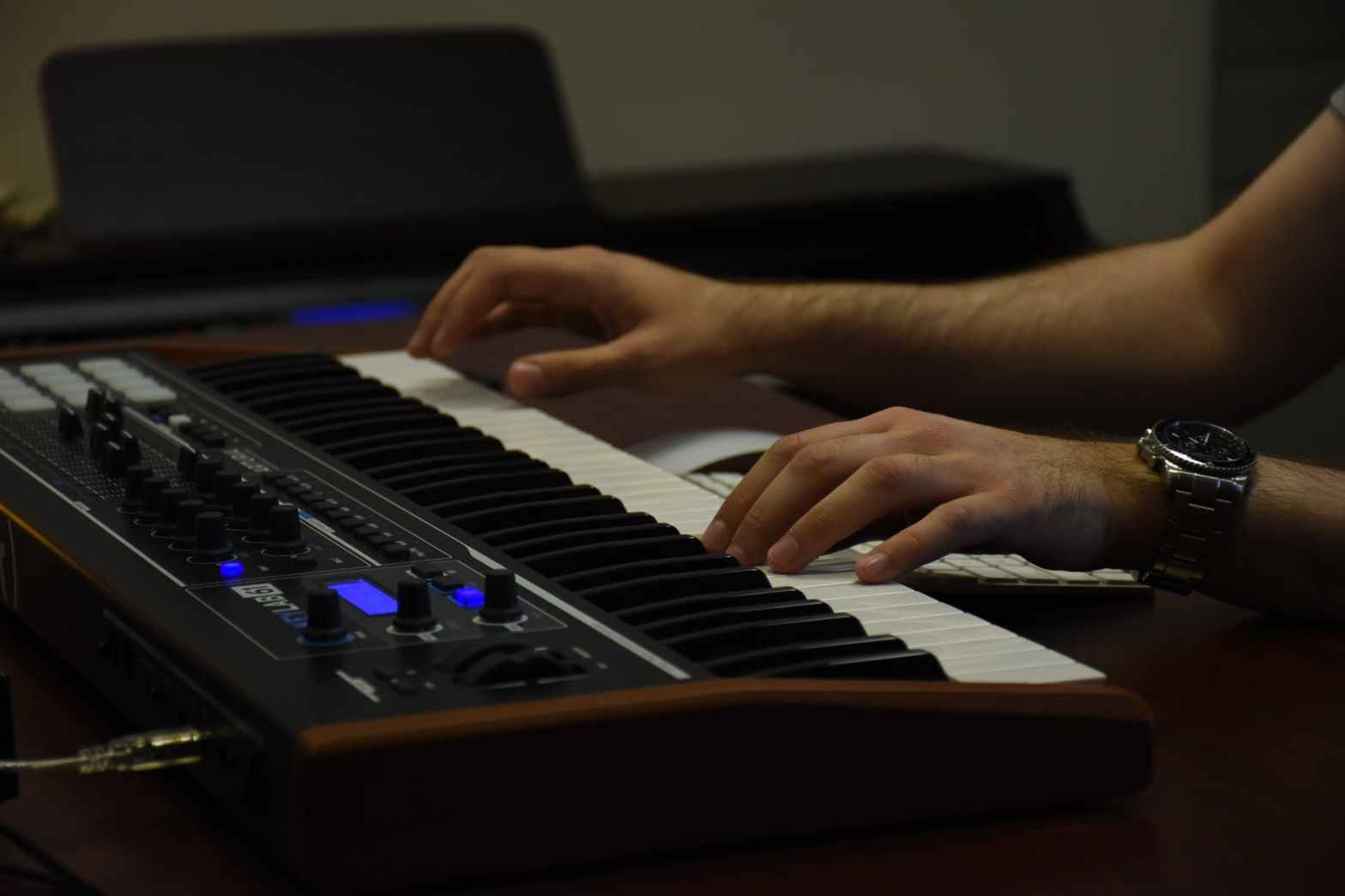
I have recently been alerted to a new research paper by Music Therapist Dr John Strange. The paper reports on a quantitative research study that is worthy of further consideration.
Controlled study of the impact on child behaviour problems of Intensive Interaction for children with ASD
Abi Tee & Phil Reed (2017) Journal of Research in Sp. Ed Needs, 17 (3), p.179–186. This study explored the effect of a home-based Intensive Interaction programme on 40 boys with autism, with the boys’ levels of challenging behaviours compared to a control group. The study also looked at predictors of the success of theContinue reading “Controlled study of the impact on child behaviour problems of Intensive Interaction for children with ASD”
Gaining the power of initiation through Intensive Interaction
Calveley, J. (2017) Learning Disability Practice, 20(1), p.19-23. Rosie was 15, living at home and cared for by her mother and a team of home carers. She had complex health needs, requiring regular nursing care and frequent hospital admissions. She was non-verbal, physically disabled and visually impaired. At the time the Intensive Interaction started RosieContinue reading “Gaining the power of initiation through Intensive Interaction”
Intensive Interaction in the mainstream classroom: evaluating staff attitudes towards an inclusive socio-communicative intervention
Eleanor M Lloyd (2015) Good Autism Practice, 16 (2), p.49-68. Current national strategies require children to be mainly taught in whole class groupings, this being particularly challenging for pupils with autism. This project investigated the possibility of achieving inclusion for children with autism via daily classroom-based sessions of ‘Communiplay’, which is based on Intensive InteractionContinue reading “Intensive Interaction in the mainstream classroom: evaluating staff attitudes towards an inclusive socio-communicative intervention”
The training of a child with autism in a Greek preschool inclusive class through intensive interaction: a case study
By Argyropoulou, Z. & Papoudi, D. (2012), European Journal of Special Needs Education, 27 (1), 99-114. This study examined social interactions during play between a young boy with autism and a typically developing girl, before and after the boy was trained by his teacher through intensive interaction. The study was conducted in a preschool inclusiveContinue reading “The training of a child with autism in a Greek preschool inclusive class through intensive interaction: a case study”
 Connecting with Intensive Interaction