In the ‘summary and conclusions’ section of her introductory chapter in the book ‘Integrating Intensive Interaction Principles into Psychological Practice’, psychologist Dr Sophie Dowell makes the following points:
~ ‘Psychologists appear to have rejected Intensive Interaction due to a lack of theoretical clarity describing the approach in psychological terms’.
~ ‘Psychological practitioners have not consistently identified and articulated the psychological benefits of Intensive Interaction, above and beyond elements of communication and social interaction’.
~ ‘The outcomes from Intensive Interaction have focused on the recipients; however, there is a significant benefit for families and staff teams in using the approach, which has not been given the importance it deserves’.
~ ‘Psychologists are also subject to the barriers that have been more generally highlighted with regard to implementing this approach, such as a resistance to engaging with individuals who are ‘seldom heard’ and a reluctance to make oneself ‘emotionally available’ to this group’.
But the hope is that, with this book [and the associated conference – see below], collectively the authors of this book can bring together the broader psychological and therapeutic community to better understand and thus embrace Intensive and Adaptive Interaction as a positive and proactive therapeutic intervention; an intervention that clearly benefits those individuals who are ‘seldom heard’, and also those who support them.
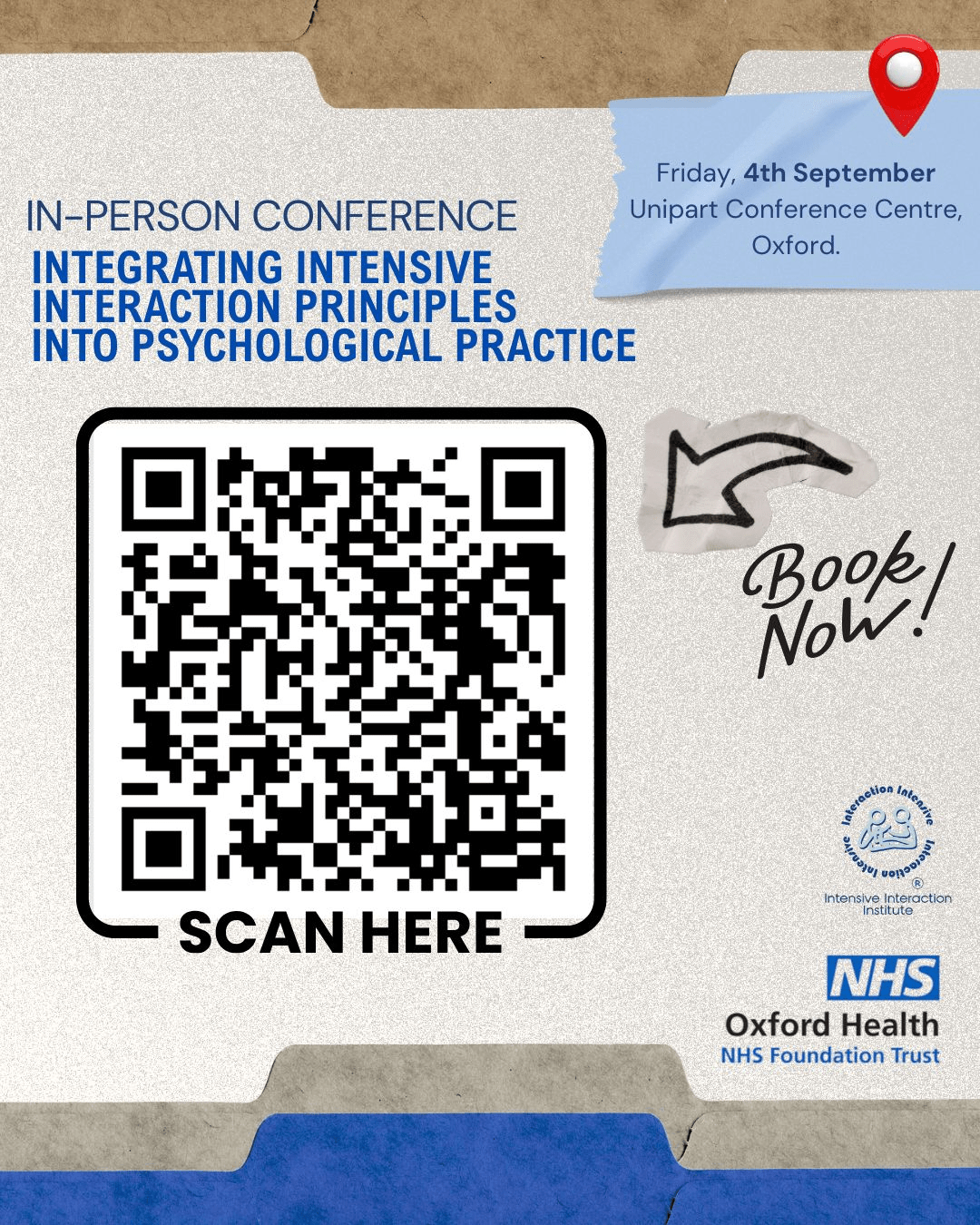
Please be a part of this vitally important conversation by joining us at this year’s Intensive Interaction Conference, unsurprisingly titled ‘Integrating Intensive Interaction Principles into Psychological Practice’, on 4th September at the Unipart Conference Centre in Oxford.
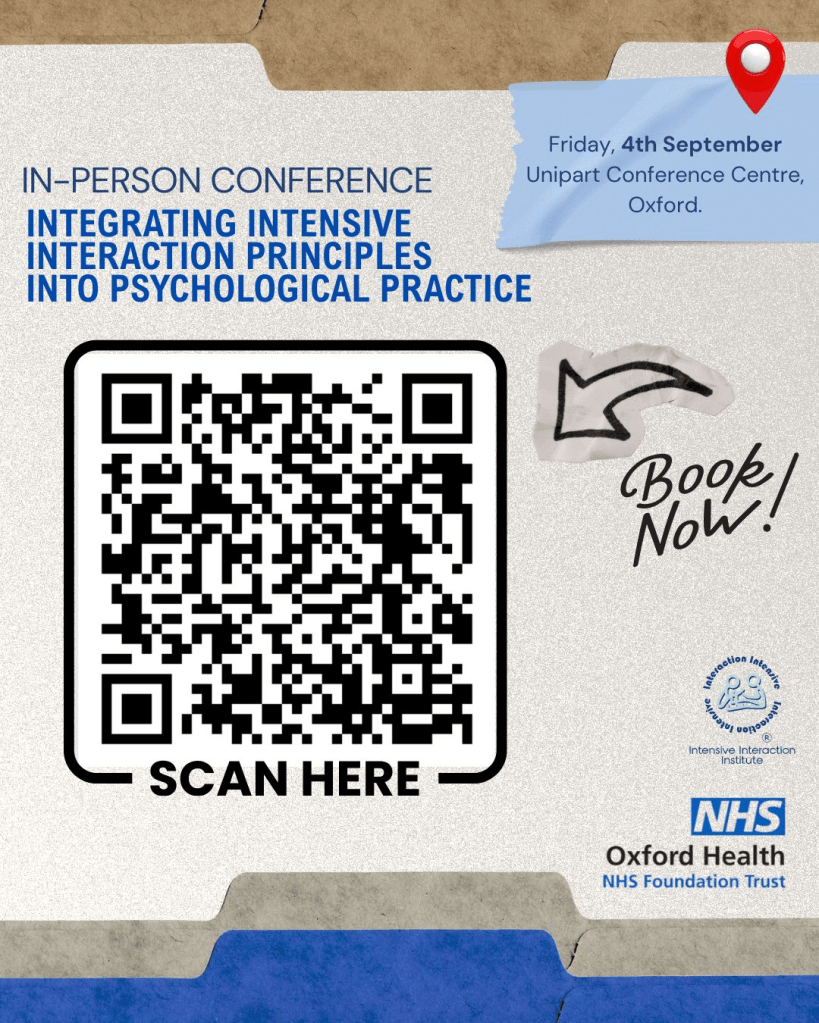
You can book your place now via the fancy QR code thingy below:
Ref: Doswell, S. & Ellis, M. (eds) (2025) Integrating Intensive Interaction Principles into Psychological Practice, Routledge; London.
 Connecting with Intensive Interaction